

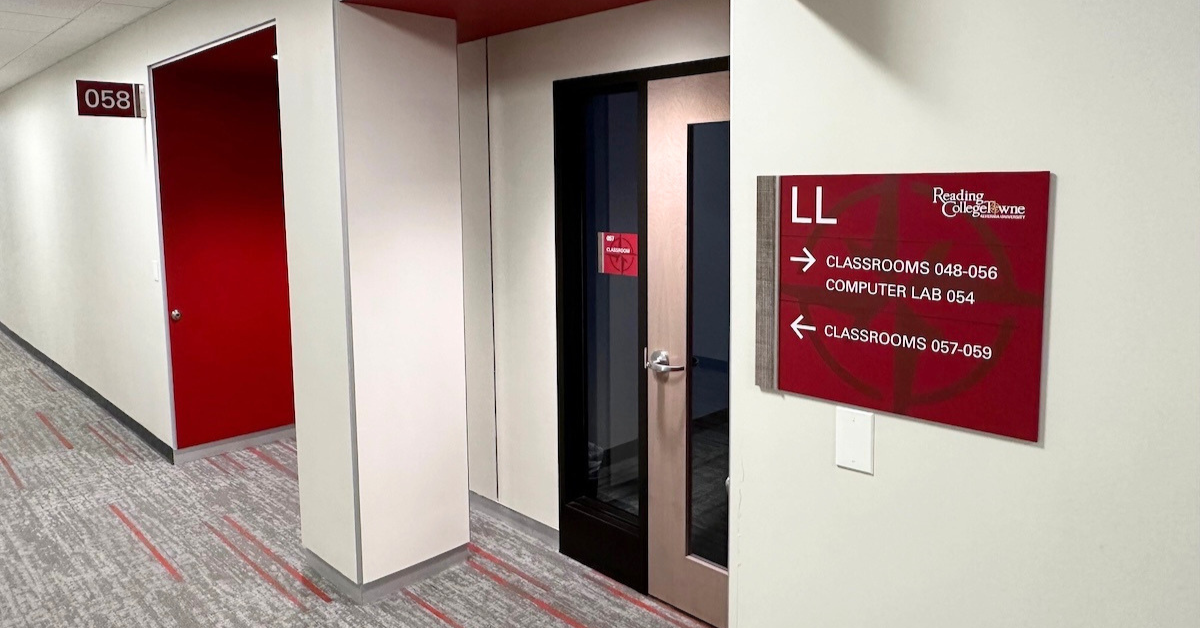
Large campuses can be difficult to navigate, especially for first-time visitors. Schools, universities, healthcare campuses, and corporate complexes often span multiple buildings and outdoor areas, making clear navigation essential. Without a thoughtful signage system, visitors may feel confused, frustrated, or overwhelmed before they even reach their destination.
Campus wayfinding signage helps create structure and clarity across these environments. It guides students, staff, parents, visitors, and event attendees through complex spaces while supporting safety, accessibility, and operational efficiency.
Planning an effective signage system requires more than simply placing directional signs around campus. A successful strategy considers traffic flow, accessibility, consistency, and long-term usability. Below are ten important elements every campus should include when planning campus wayfinding signage.
1. Clear Entry Identification
Visitors should immediately understand where they are upon arriving at campus entrances. Main entry signs establish identity and confirm that guests have reached the correct location.
Campus wayfinding signage at entry points should be highly visible from the road and easy to read from a distance. Clear campus identification reduces uncertainty and creates a welcoming first impression.
2. Consistent Directional Signage
Directional signs are the foundation of effective navigation. Visitors rely on them to move between buildings, parking lots, athletic facilities, and administrative offices.
Campus wayfinding signage should use consistent fonts, colors, arrows, and terminology throughout the property. Inconsistent design creates confusion and weakens usability.
Consistency helps visitors quickly recognize and interpret information without hesitation.
3. Readable Maps and Directories
Large campuses benefit from maps placed at key decision points. Directories provide an overview of the campus layout and help visitors orient themselves.
Campus wayfinding signage should include maps that are simple, uncluttered, and easy to understand. Clearly marked “You Are Here” indicators improve orientation and reduce stress for first-time visitors.
4. ADA-Compliant Signage
Accessibility is an essential part of any signage system. Campuses serve diverse populations, and signage should support navigation for individuals of all abilities.
Campus wayfinding signage should include tactile lettering, braille, proper contrast, and compliant mounting heights where required. Accessible signage improves usability and supports inclusivity across the campus environment.
5. Parking and Traffic Guidance
Parking confusion is one of the most common frustrations for campus visitors. Clear parking signage improves traffic flow and helps guests find appropriate lots quickly.
Campus wayfinding signage should identify visitor parking, staff parking, accessible spaces, and loading zones clearly. Directional signs leading to parking areas reduce congestion and improve efficiency during busy periods.
6. Building Identification
Every building should be clearly marked with visible identification signage. Visitors should not need to guess whether they have arrived at the correct destination.
Campus wayfinding signage for building identification should remain visible from multiple approaches and maintain consistency across the campus. Proper building identification supports both navigation and emergency response.
7. Emergency and Safety Information
Safety signage is critical on campuses with large populations and multiple facilities. Emergency exits, evacuation routes, and emergency contact locations should be clearly marked.
Campus wayfinding signage should support emergency preparedness by helping visitors understand where to go during unexpected situations. Clear safety communication improves response times and reduces confusion.
8. Exterior and Interior Coordination
Wayfinding should feel continuous from the moment visitors arrive until they reach their final destination. Exterior and interior signage must work together seamlessly.
Campus wayfinding signage should maintain consistent design elements across outdoor and indoor environments. This continuity helps visitors feel oriented as they move through different areas of the campus.
9. Durable Materials for Long-Term Use
Campuses experience heavy daily traffic and constant environmental exposure. Signage must be durable enough to maintain readability and appearance over time.
Campus wayfinding signage often uses weather-resistant metals, durable finishes, and high-quality mounting systems to ensure long-term performance. Durable materials reduce maintenance and replacement costs while preserving professionalism.
10. Flexibility for Future Growth
Campuses evolve over time. New buildings, parking areas, and programs may require updates to the signage system.
Campus wayfinding signage should be planned with future expansion in mind. Flexible systems allow updates and additions without replacing the entire network of signs.
Planning ahead helps campuses maintain consistency as they grow.
Why Professional Planning Matters
Wayfinding systems require careful coordination and strategy. Signage placement, readability, accessibility, and design all influence effectiveness.
Professional fabricators and signage planners understand how to create campus wayfinding signage that performs reliably in complex environments. Their expertise helps campuses avoid common mistakes and develop systems that remain effective long term.
Effective Signage System
An effective signage system helps campuses feel organized, welcoming, and easy to navigate. From entry identification and parking guidance to accessibility and safety, every detail contributes to the visitor experience.
Campus wayfinding signage supports students, staff, and visitors by reducing confusion and improving movement throughout the property. With thoughtful planning and durable materials, campuses can create signage systems that remain effective for years.
Improve Your Campus Wayfinding Signage
If your campus is planning a new or updated wayfinding system, L&H Signs can help create campus wayfinding signage designed for clarity, durability, and long-term performance.
Want to stay up to date with the latest at L&H Signs? Follow us on Instagram and Facebook and connect with us on LinkedIn!
Recent Comments