

A well-organized school campus does more than provide classrooms and learning spaces. It creates an environment where students, teachers, staff, parents, and visitors can move confidently, locate important areas, and feel connected to the school community. From the moment someone approaches the property to the time they leave, signage plays an important role in shaping that experience.
School signs serve several purposes beyond identifying buildings. They help direct traffic, support accessibility, communicate important safety information, and reinforce school identity. Whether a campus includes a single elementary school building or multiple academic facilities, athletic fields, and administrative offices, a thoughtful signage system contributes to daily operations.
Without clear signage, visitors may struggle to locate the main entrance, parents may become confused about pickup procedures, and students may have difficulty navigating unfamiliar buildings. These issues can become especially noticeable during busy arrival periods, school events, or the beginning of a new academic year.
Investing in well-designed school signs helps educational facilities create an organized, welcoming, and professional environment. Below are seven essential types of signage every campus should consider, along with the role each plays in supporting students, staff, and visitors.
1. Main Entrance and School Identification Signs
The main entrance is often the first physical interaction someone has with a school. Whether a family is visiting for enrollment, a parent is attending a conference, or a community member is arriving for an event, clear identification helps establish that they have reached the correct location.
Main entrance signage should prominently display the school’s name and, when appropriate, its logo or mascot. The design should reflect the school’s identity while remaining readable from the road or surrounding pedestrian areas.
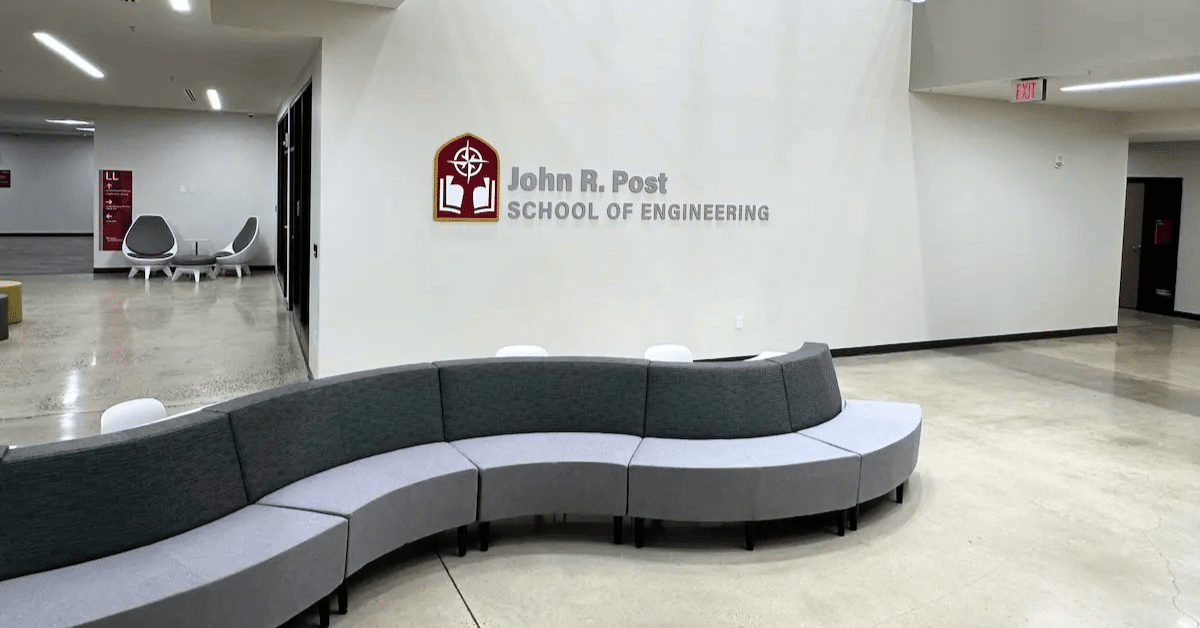
For larger campuses, monument signs, dimensional lettering, or architectural signage may provide an effective way to establish a recognizable entrance. The appropriate format depends on the property’s layout, available space, surrounding architecture, and local signage requirements.
School signs positioned near primary entrances also help distinguish visitor access points from employee entrances, student drop-off areas, and service locations. This distinction can be particularly important at facilities where several buildings or driveways are located close together.
A well-designed entrance sign should complement the school’s architecture rather than appearing disconnected from the building. Materials, finishes, typography, and colors can work together to create a professional appearance that remains recognizable over time.
Beyond identification, entrance signage creates an opportunity to reinforce school pride. A consistent visual identity helps students and families develop familiarity with the campus while presenting a welcoming impression to first-time visitors.
2. Campus Wayfinding and Directional Signs
Navigation becomes increasingly important as school properties grow. A campus may include academic buildings, administrative offices, libraries, cafeterias, gymnasiums, athletic fields, performing arts centers, and outdoor gathering spaces.
Without clear directional information, even relatively small campuses can become confusing for visitors who are unfamiliar with the layout.
Directional school signs help people understand where they are and how to reach their destination. They may identify building entrances, point toward major facilities, or guide pedestrians along established routes.
Effective wayfinding begins with understanding how people move through the property. A visitor arriving from the parking lot may need different information than a student traveling between classrooms or an employee accessing a service entrance.
Sign placement should reflect those movement patterns.
For example, directional information is most helpful before someone reaches an intersection or must choose between multiple pathways. A sign installed after the decision point may force visitors to turn around or ask for assistance.
Consistency also matters. Building names, arrows, fonts, colors, and symbols should follow an established system so people can recognize and interpret information quickly.
A comprehensive wayfinding strategy can also coordinate exterior directions with interior signage. Visitors should be able to move from the parking area to the correct building and then locate the appropriate room without encountering conflicting information.
When planned thoughtfully, directional signage reduces confusion and supports a smoother experience throughout the school day.
3. Classroom and Interior Identification Signs
Once students and visitors enter a building, interior identification becomes essential. Hallways may contain dozens of classrooms, offices, laboratories, restrooms, and specialized learning spaces.
Clear room identification helps students locate their classes, supports substitute teachers and visiting professionals, and makes the building easier to navigate during events.
Interior school signs commonly identify classrooms, administrative offices, libraries, counseling areas, restrooms, and other frequently used spaces.
These signs should follow consistent naming and numbering conventions. If a school uses room numbers, those numbers should align with building directories, schedules, and other navigation materials.
Readability is another important consideration. Lettering should be easy to distinguish, and signs should be positioned where people naturally look when approaching a doorway or hallway.
Schools should also consider how identification signage supports accessibility. Certain permanent room identification signs are subject to applicable accessibility requirements, which may include tactile characters, braille, specific mounting locations, and other design standards.
A consistent interior signage system also contributes to the appearance of the building. Matching materials, typography, and finishes help create a coordinated environment rather than a collection of unrelated signs.
This becomes especially valuable when schools renovate individual wings or add new classrooms over time.
4. Safety and Emergency Information Signs
Safety communication is one of the most important responsibilities of a school signage system. Students, employees, and visitors need to understand essential information about exits, restricted areas, emergency procedures, and designated locations.
Although signs are only one component of a broader safety plan, they help communicate information quickly and consistently.
Safety-related school signs may identify emergency exits, evacuation routes, restricted-access areas, designated assembly locations, and other areas where clear instructions are necessary.
The design of these signs should prioritize readability and recognition. Critical information must be distinguishable from decorative graphics or general campus branding.
Placement is equally important. Signs should appear where the information is relevant and remain visible under the conditions in which they may be needed.
For example, exit identification should be coordinated with the building’s layout and applicable building and fire code requirements. Restricted-area signage should be positioned before someone enters a controlled space.
Schools should work with appropriate facilities personnel, safety professionals, and local authorities when determining compliance requirements.
Another consideration is consistency across buildings. If a district operates multiple schools, using a coordinated approach to safety identification can help staff and visitors recognize important information more easily.
As buildings are renovated or circulation patterns change, safety-related signage should also be reviewed to ensure it remains accurate.
5. Parking, Drop-Off, and Traffic Direction Signs
Arrival and dismissal periods are among the busiest times on many school campuses. Buses, parent vehicles, employees, pedestrians, and service vehicles may all use the property within a relatively short period.
Without clear traffic guidance, confusion can develop around entrances, parking areas, pickup lanes, and pedestrian crossings.
Exterior school signs can help identify visitor parking, staff parking, bus loading zones, student drop-off areas, accessible parking, and designated pickup locations.
These signs should be planned around the actual traffic patterns of the campus. A directional sign that works well during a quiet afternoon may be difficult to see when vehicles are lined up during dismissal.
Visibility from approaching vehicles is particularly important. Drivers need enough time to identify information and respond safely.
Signs should also distinguish between permanent traffic instructions and procedures that may change depending on the time of day or school activities.
For campuses with multiple entrances, consistent terminology can help families understand which driveway or parking area they should use.
Schools should coordinate traffic signage with their established transportation procedures and any applicable roadway or accessibility requirements.
Thoughtful planning helps reduce unnecessary vehicle movements, supports more predictable traffic patterns, and makes arrival easier for families who may be visiting for the first time.
6. Athletic Facility and School Spirit Signs
Athletic facilities often serve as important gathering spaces for students, families, alumni, and the surrounding community. Gymnasiums, stadiums, athletic fields, and recreation areas may host school competitions, community events, graduation ceremonies, and other activities.
These environments benefit from signage that supports both identification and school identity.
Custom school signs can incorporate school colors, mascots, logos, dimensional lettering, and architectural features that reinforce the institution’s visual identity.
For example, a gymnasium entrance may feature dimensional school lettering, while an athletic complex may use larger identification signage designed to be visible from surrounding parking areas or pedestrian routes.
Branding should remain consistent with the rest of the campus. Using established colors, typography, and logo standards helps athletic facilities feel connected to the broader school environment.
Functional signage is equally important. Visitors may need directions to spectator entrances, ticketing areas, seating sections, restrooms, concessions, and accessible routes.
Because athletic facilities often accommodate larger crowds than academic buildings, visibility and placement deserve particular attention.
Outdoor facilities also introduce additional durability considerations. Signs may be exposed to sunlight, moisture, temperature changes, and regular event activity.
Selecting appropriate materials and finishes helps maintain a professional appearance while supporting long-term use.
When branding and navigation work together, athletic signage can contribute to a memorable environment that celebrates school identity while helping visitors move confidently through the facility.
7. ADA and Accessibility Signs
Accessibility should be considered throughout a school campus, not only at individual entrances or classrooms.
Educational facilities serve students, employees, families, and community members with different mobility, visual, and communication needs. Signage should support navigation for as many people as possible while meeting applicable requirements.
Accessible school signs may include permanent room identification, restroom identification, accessible entrance information, and directions to accessible routes or facilities.
Requirements vary depending on the type and function of the sign. Certain signs require tactile characters and braille, while others are governed by different standards for visual characters, contrast, or placement.
It is important not to assume that every sign has identical accessibility requirements.
A well-planned signage program evaluates each application individually and incorporates relevant standards during the design process.
Beyond compliance, accessibility also involves making information easy to understand. Consistent terminology, readable lettering, clear directional symbols, and logical placement can benefit everyone navigating the campus.
For example, a visitor who cannot use a particular staircase should be able to identify an appropriate accessible route without unnecessary confusion.
Schools should also consider how interior and exterior accessibility information connects. Clear identification at the entrance is helpful, but visitors may still need directions to elevators, accessible restrooms, and other facilities once inside.
A coordinated approach helps create an environment that feels more welcoming and easier to navigate.
How to Plan a Complete School Signage System
Understanding the different types of signage is only the beginning. A successful campus signage project also requires planning around location, materials, visibility, branding, and future maintenance.
Rather than selecting individual signs without considering the larger property, schools can benefit from evaluating their entire signage system.
An effective starting point is a campus walkthrough. Facilities teams can review existing signs, identify missing information, and consider how different visitors experience the property.
This process may reveal outdated building names, inconsistent room numbers, poorly positioned directional signs, or areas where visitors regularly ask for assistance.
Schools should also consider the relationship between signage and their long-term facilities plans.
A campus preparing for renovations, building additions, or athletic facility improvements may benefit from establishing consistent signage standards before those projects begin.
Custom school signs can then be designed to fit within that larger system, helping new installations complement existing elements rather than creating visual inconsistencies.
Material selection should also reflect the environment. Exterior signs may require weather-resistant materials and finishes, while interior signs may prioritize readability, accessibility, and resistance to everyday wear.
Installation considerations are equally important. Mounting surfaces, visibility, structural requirements, and pedestrian circulation can influence the appropriate design and placement.
By addressing these factors early, schools can create a more coordinated signage program that supports current needs while allowing for future improvements.
Why Consistent Branding Matters Across Campus
School branding extends beyond athletic uniforms and promotional materials. Building identification, entrance signs, interior directories, and athletic signage all contribute to how students and visitors recognize the institution.
When these elements use consistent colors, typography, materials, and design details, the entire campus feels more connected.
This consistency is particularly valuable for school districts operating multiple facilities. While each building may have its own identity, coordinated design standards can help create a recognizable district-wide appearance.
Consistency can also make maintenance and future updates easier. When materials, finishes, and sign styles are documented, schools have a clearer reference for additions or replacements.
Professional school signs should balance visual identity with practical performance. A sign can reinforce school pride while remaining readable, accessible, and appropriate for its location.
The strongest signage systems achieve both goals without sacrificing one for the other.
Planning for Durability and Long-Term Value
School facilities are used heavily throughout the year. Hallways experience frequent foot traffic, exterior entrances are exposed to changing weather, and athletic areas may accommodate large crowds during events.
For these reasons, durability should be considered during the earliest stages of signage planning.
The appropriate material depends on the sign’s purpose, location, and expected conditions. Exterior building identification may require different construction methods than interior room identification or hallway directories.
Finishes should also be selected with maintenance in mind. Signs that are difficult to clean or prone to visible wear may require more frequent attention.
Long-term value is not simply about choosing the least expensive initial option. It involves selecting signage that maintains its appearance, communicates effectively, and remains suitable for its environment.
Thoughtful fabrication and installation can help schools avoid unnecessary replacement costs while preserving a consistent campus appearance.
Creating a More Organized and Welcoming Campus
An effective signage system should make everyday experiences easier. Students should be able to identify classrooms and facilities, parents should understand arrival procedures, and visitors should feel confident navigating unfamiliar spaces.
Well-designed school signs support those goals by combining clear communication with a cohesive visual identity.
From the main entrance to interior hallways, athletic facilities, parking areas, and accessible routes, each sign contributes to how the campus functions.
Schools planning renovations, expansions, or signage updates should consider how these elements work together rather than approaching each sign as a separate project.
A coordinated strategy can improve navigation, support accessibility, reinforce school identity, and create a more professional environment for everyone who visits.
Explore Custom School Signage With L&H Signs
Whether your school is updating building identification, improving campus wayfinding, or planning signage for a new facility, L&H Signs can help develop custom signage solutions that complement your campus and support long-term use.
Want to stay up to date with the latest at L&H Signs? Follow us on Instagram and Facebook and connect with us on LinkedIn!
Recent Comments